From residual raw materials to resource: Blue and green industries unite on common solutions
How can we ensure that more of the raw materials from land and sea are utilized, and what barriers stand in the way of new value chains based on residual raw materials?
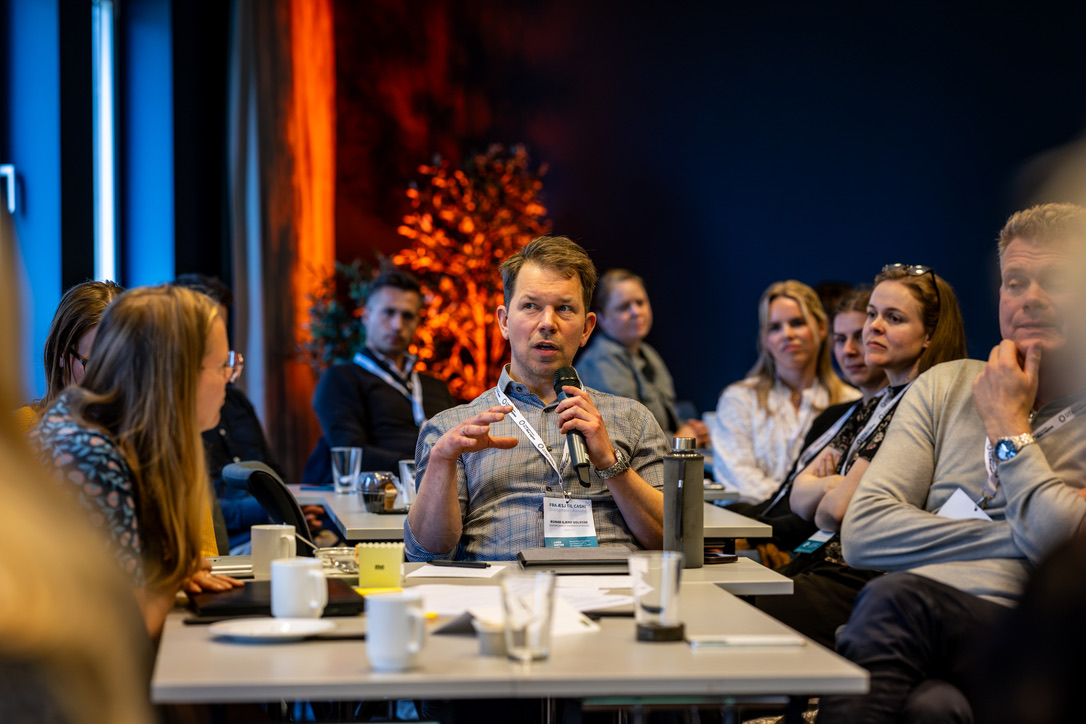
This was the starting point when the clusters in the Land meets Sea collaboration gathered around 60 participants from the blue and green sectors for a dialogue meeting in Ålesund. Among the participants was the secretariat for the Community Mission on Sustainable Feed, which contributed important perspectives to the discussions.
Through discussions across business, research and policy, it became clear that the challenges are largely shared. The day also pointed to a clear main conclusion: We have much of the raw material, knowledge, technology and infrastructure. The challenge is to connect this together, prioritize harder and get the solutions through the scaling gap.
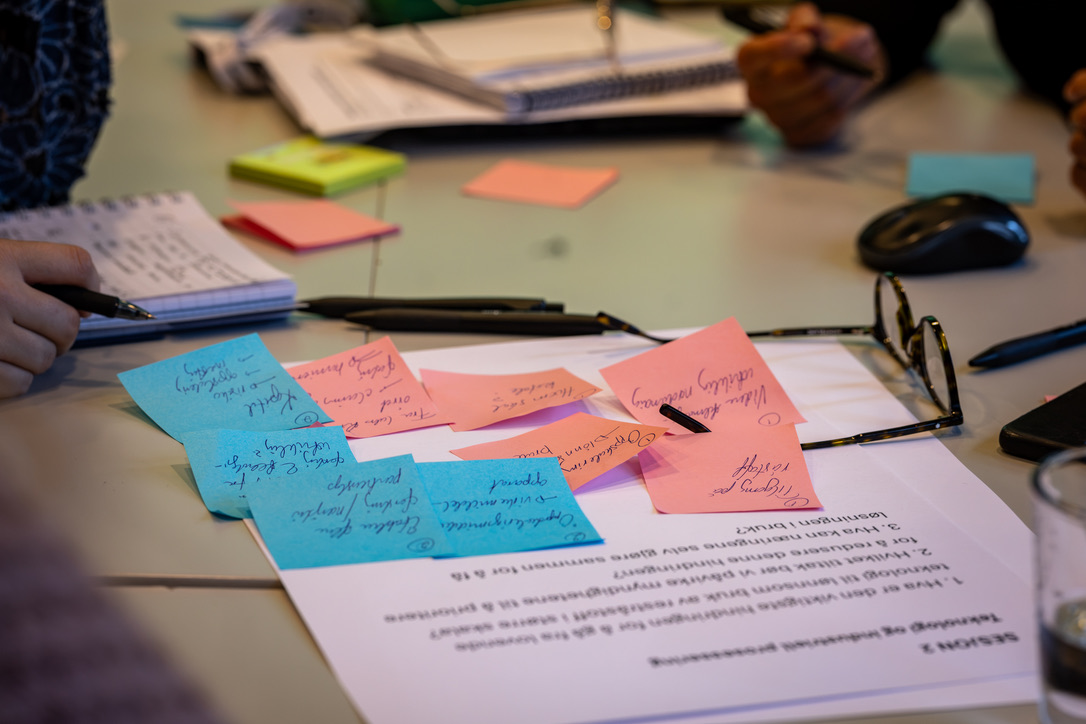
Regulations that slow down the utilization of residual raw materials
The day started with presentations from FORSYNE, Sirkfôr and Fremtidsfôr, who showed how better utilization of residual raw materials can strengthen raw material preparedness, increase value creation and contribute to more circular food systems. However, preparedness is not just about access to raw materials. Value chains must be synchronized, and capacity for processing, logistics and redistribution must be in place before a crisis occurs.
In the discussions, the TSE regulations and by-product regulations in particular were highlighted as challenges across both the blue and green sectors. The regulations regulate how animal raw materials and by-products can be handled and used further, and several participants pointed out that the current framework may limit the development of new value chains based on residual raw materials.
A consistent message was that these are not challenges for a single industry, but a common need across sectors. A concrete proposal from the meeting was to bring together actors working with the same regulatory barriers, prioritize which changes are most important and build the necessary scientific documentation together. The good dialogue with the Norwegian Food Safety Authority provides a positive starting point for more coordinated work towards Norwegian authorities and European regulatory processes.
“ Norway must be more active when the EU is drafting regulations, not only when the regulations come into force. Norway is particularly strong in the marine sector, so we have an important voice. ”
The discussions also showed that access to raw materials is not necessarily the biggest challenge. Several highlighted the lack of processing capacity and limited opportunities to test and scale new solutions as key bottlenecks today. A great potential therefore lies in smarter use, higher value exploitation and the possibility of reallocation, not just in finding more tons of raw materials.
Need for technology and industrial processing
Even when the raw material is available and the regulations open up for new applications, an important challenge remains: how the residual raw material can be processed and put to use in a profitable way. The presentations from FlexBio and Biotep focused on how technology and processing can help to better utilize residual raw materials and develop new products and value chains.
In both the blue and green sectors, there was broad agreement that many innovation projects stop in the transition from pilot to industrial production. Participants pointed to the need for better access to testing, piloting and scale-up capacity. At the same time, significant infrastructure already exists, including through Biotep. An important task is therefore to highlight what exists, what the capacity can be used for, and where the real gaps lie.
The need for scaling financing was a recurring theme in the discussions. Several called for instruments that can reduce the risk when companies take the step from pilot to industrial production. At the same time, it was emphasized that scaling financing must also include market maturation. It is not enough to finance technology and production capacity if the market is not developed in parallel. New solutions must be given the opportunity to be tested in the market, build customer needs and create the basis for long-term agreements.
At the same time, it was emphasized that the entire value chain must be profitable. Without predictable customers, long-term raw material agreements and an understanding of the economics of each link, it is challenging to defend the investments that will take new solutions from idea to industry. Several therefore advocated clearer prioritization: Instead of spreading expertise and capital over many small initiatives, some raw materials and ventures with real industrial potential should be followed all the way to the market.
Consumer, market and reputation
The final part of the program focused on how new feed and food solutions are perceived in the market. Presentations on chicken meal in salmon feed, communication, social acceptance and consumer psychology showed that technology and regulations alone are not enough to succeed. A solution can work technically and provide a good end product, but still be met with skepticism because the consumer reacts to how the raw material is perceived.
The trials presented showed that the use of chicken meal in salmon feed did not have negative effects on presentation, smell or taste. At the same time, consumer surveys showed that chicken-based feed ingredients were among the least preferred in both France and the UK. The contrast illustrates the challenge: Documented quality does not automatically lead to market acceptance.
Communication also needs to be tailored to different markets. Measures that influenced attitudes in France did not have the same effect in the UK. Therefore, there is no one universal message. The industry needs to understand the target audience, explain the value while delivering a good dining experience.
Social acceptance cannot be built by individual companies alone. Industry, research, authorities, environmental organizations and other credible social actors must contribute knowledge, documentation and open communication. It was also emphasized that both the blue and green sectors must stand united on the message. This is particularly important when new resources are being used and the social license is still being developed.
The market must therefore develop in parallel with the technology. Authorities may be concerned with preparedness and security of supply, investors with profitability and growth opportunities, and consumers with quality, food safety and trust. Messages and documentation must be adapted to these different needs.
The way forward
Across all the discussions, the conclusion was clear: The potential is great, but it requires more than general calls for cooperation. Participants called for a national mapping of blue and green raw materials and side streams. At the same time, the need for better overview of testing and scale-up infrastructure, financing of scaling and market maturation, and more coordinated work on prioritized regulatory changes was pointed out.
The dialogue meeting showed that the blue and green sectors largely face the same barriers. This provides a good starting point for further collaboration to develop new value chains and increase value creation from the resources we already have available.
The crucial question going forward is therefore: What should we unite around first, who must be involved, and who takes the initiative?
Land meets Sea is a collaboration between the four clusters NCE Seafood, NCE Blue Legasea, NCE Heidner Biocluster and Biotech North. The ambition is to strengthen the Norwegian bioeconomy, sustainable innovation and industrial development across the blue and green sectors. Focus areas are increased circularity, better utilization of bioresources and contributing to reducing the environmental footprint.