Can chicken waste be used as salmon feed? The answer may lie in a new 18 million kroner research project.
How can we increase the utilization of leftovers from chicken production in feed for salmon? A new research project, which started on October 1, 2024, will provide the answer to this question.
With chicken meal as a potential replacement for soy in salmon feed, the project can both reduce greenhouse gas emissions and promote a more circular economy in the food industry.
"If we succeed, the salmon industry will have a new alternative, either to fishmeal, which is a scarce resource, or to soy concentrate, which is the component in salmon feed that is usually attributed to the heaviest climate footprint," says project manager Bjarne Hatlen, senior researcher at Nofima AS.
Photo: Bjarne Hatlen, Project Manager at Nofima
From food waste to salmon food
In today's salmon feed, over 70 percent of the protein comes from plant sources. One of these is imported soy, which requires significant land and resources. By upgrading residual raw materials from chicken production into salmon feed, one can both reduce the environmental footprint and create value locally.
The project is about more than fish feed. Consumer attitudes are also crucial. Many may ask themselves: “Is it okay for salmon to eat chicken?” but we do not know how concerned consumers actually are about this. By asking European consumers, the researchers in the project hope to gain more knowledge about their attitudes towards new raw materials such as chicken meal, and how attitudes are influenced when consumers are informed about how leftover raw materials from chicken can contribute to both safe food, better resource utilization and a smaller footprint.
The development of new feed raw materials is a priority task for several of the actors participating in the research project. In order to contribute to achieving the authorities' environmental and climate goals, it is important to find new alternatives that can be used in Norwegian salmon feed. A participant in the reference group emphasizes this:
"We need to think new and big if we are to achieve climate goals, and animal by-products are a resource that is nutritionally well suited to salmon feed and is already used in feed in other parts of the world. Making fish feed even more sustainable is Cargill's most important contribution to increasing the production of sustainable and healthy Norwegian seafood for a growing world population," says Ted Andreas Mollan, Category Manager for Raw Materials Supply (RMS) at Cargill. Image: Ted Andreas Mollan, Category Manager for Raw Materials Supply (RMS) at Cargill. Photo: Cargill AS
Chicken meal: A promising and available alternative for salmon feed?
The government's social mission for sustainable feed has given extra momentum to the development. Authorities and the business community are now collaborating to find innovative solutions that can reduce the industry's climate footprint. "For example, insects, tunicates, mussels, bacteria and yeast. Many of these have a long way to go before they can be produced in volumes and at a price that is interesting for salmon feed producers," says Hatlen.
"Animal by-products from land, such as chicken meal, stand out from other new raw materials in that they are already available in large volumes. However, there is still some research that can remove the last obstacles for the Norwegian salmon industry to take up this," says Hatlen.
But despite the great potential, Hatlen points out two challenges in particular that must be solved before chicken meal can become a natural part of Norwegian salmon feed: the digestibility of the chicken meals offered is variable and often too low in salmon, and we lack knowledge about consumer acceptance of salmon fed with chicken meal.
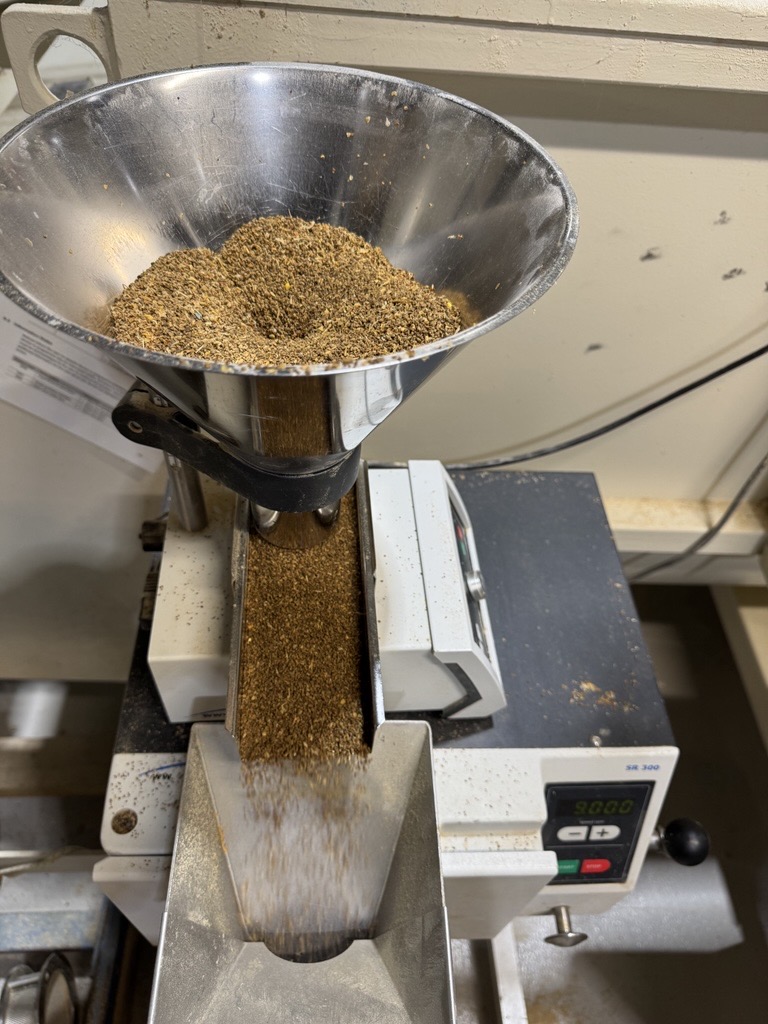
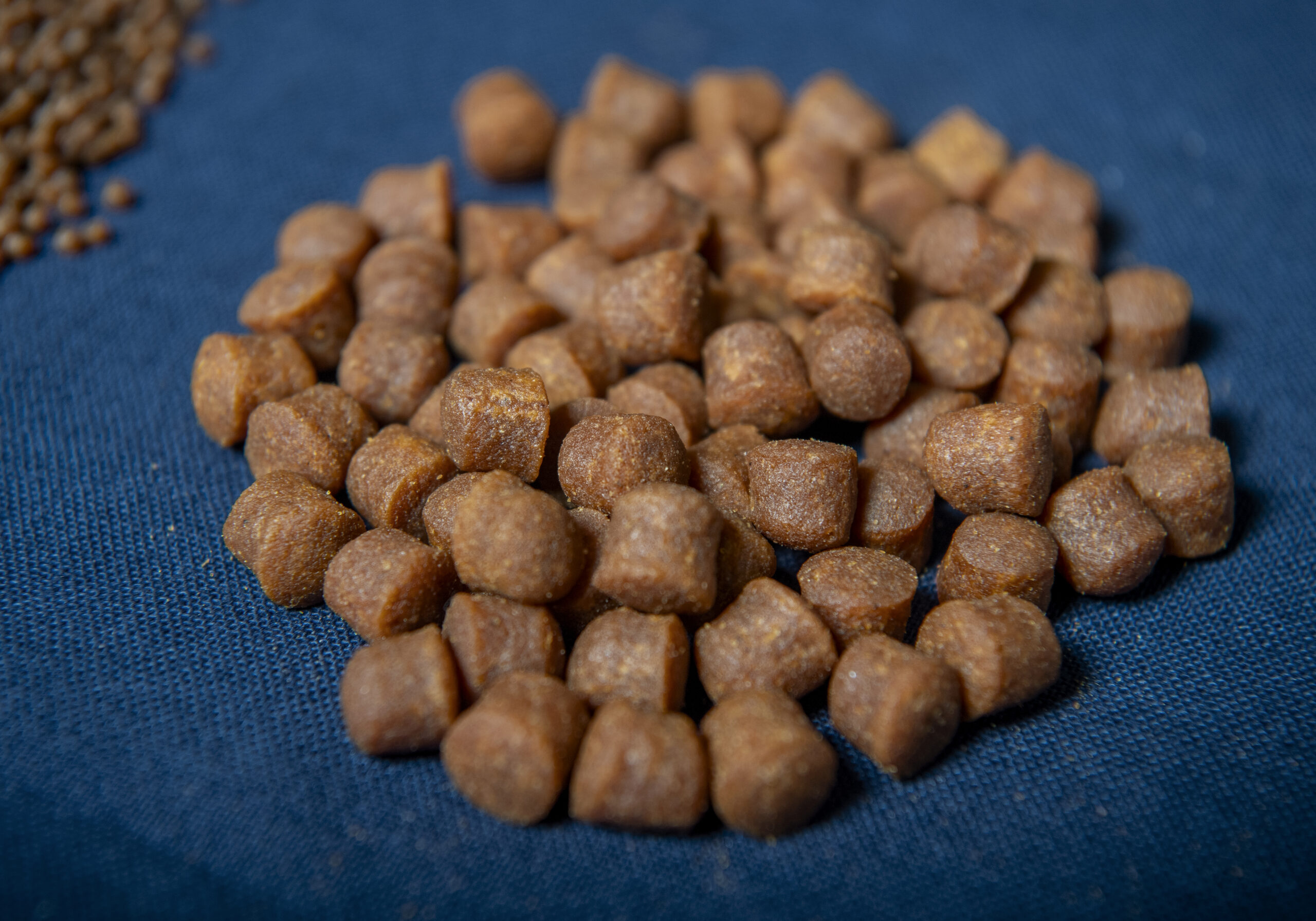
Photo: Truls Wergeland, Nofima.
A collaboration with high ambitions and high utility
The project spans three years, and brings together players from the entire value chain: Nofima, Mowi Feed, Nutrimar, and NCE Seafood constitute the project participants, while Cargill, the Norwegian Seafood Council and Cermaq sit in the reference group. In addition, a blue-green cluster collaboration will play an important role in disseminating the project's results. The Land meets Sea clusters NCE Seafood, NCE Heidner Biocluster, NCE Blue Legasea and Biotech North will collaborate to disseminate the project's results so that the findings will reach out widely and create value across industries and sectors. The project has received a total of 18 million kroner in total support, of which 14.6 million is supported by the Fisheries and Aquaculture Industry's Research Funding (FHF). The remaining 3.6 million are contributions from Mowi Feed and Nutrimar.
Together they will work towards a common goal: To facilitate increased utilization of chicken waste products in salmon feed, a solution that could be important for the aquaculture industry.

"This is an important project for the aquaculture industry that will provide insight into barriers to using the feed raw material, as well as building a basis for commercial exploitation of the results," explains Solveig Holm, project manager at NCE Seafood. Image: Solveig Holm, project manager at NCE Seafood.
The Norwegian Fisheries and Aquaculture Industry Research Fund (FHF) has financed most of the project, with contributions from partners Mowi Feed and Nutrimar. With a budget of NOK 18 million and a strong team, the ambitions are high. “We will work at both ends of the value chain, and research both raw material processing and customers’ attitudes towards salmon that has been fed chicken meal. But the benefit is just as great for the links in between, such as feed producers and fish farmers,” concludes Hatlen.