OPINIONS 05.10.2016 09:17 By professor Stig-Erik Jakobsen, Bergen University College, researcher Rune Njøs, Bergen University College, CEO Owe Hagesæther, GCE Subsea, CEO Tanja Hoel, NCE Seafood
"Anita Krohn Traaseth and Silvija Seres write in Aftenposten 18.9 about what "Norway will live on" in the future. The authors have several good points. Among other things, we will see changes in competence needs, a more central role for so-called enabling technologies and a more research-driven business sector.
What the authors fail to convey, however, is the power of change that lies within existing businesses.
What was
Energy, seafood and maritime activities are our most important export industries and are absolutely central when Norwegian and Western Norway's business sector is to be restructured and further developed. It is in these industries that we have unique knowledge, and this is where our global competitive advantages lie. These industries will also be the foundation when tomorrow's business sector is to be developed.
Record number of companies seek support for innovation
Restructuring is primarily influenced by what was, and less by what could be.
In the future, we will largely live off the same things as before, but in different and smarter ways. This also means constantly taking on and further developing existing expertise, business models and technology, while being able to use the potential that lies in new research and enabling technologies.
Lessons from the oil industry
Currently, many companies are looking for new market opportunities.
Research conducted in collaboration between Bergen University College, the University of Agder and the University of Stavanger shows that the opportunities for success are greatest when companies move into related markets. These are areas where they can use and continue existing technological and market expertise, but it also requires working differently and smarter than before.
Will help environmental entrepreneurs in Rogaland with 400 million kroner
For example, the fish farming industry, which is experiencing rapid growth, can learn a lot from the Vestland oil industry adventure.
Value chains from the oil and gas industry are being restructured and adapted to markets related to the ocean space. This increases value creation, creates jobs and reduces business risk. GCE Subsea has a particular focus on this at the moment, which has resulted in a number of concrete initiatives where industry players from oil and aquaculture meet to identify and specify opportunities for knowledge transfer.
Entering new markets
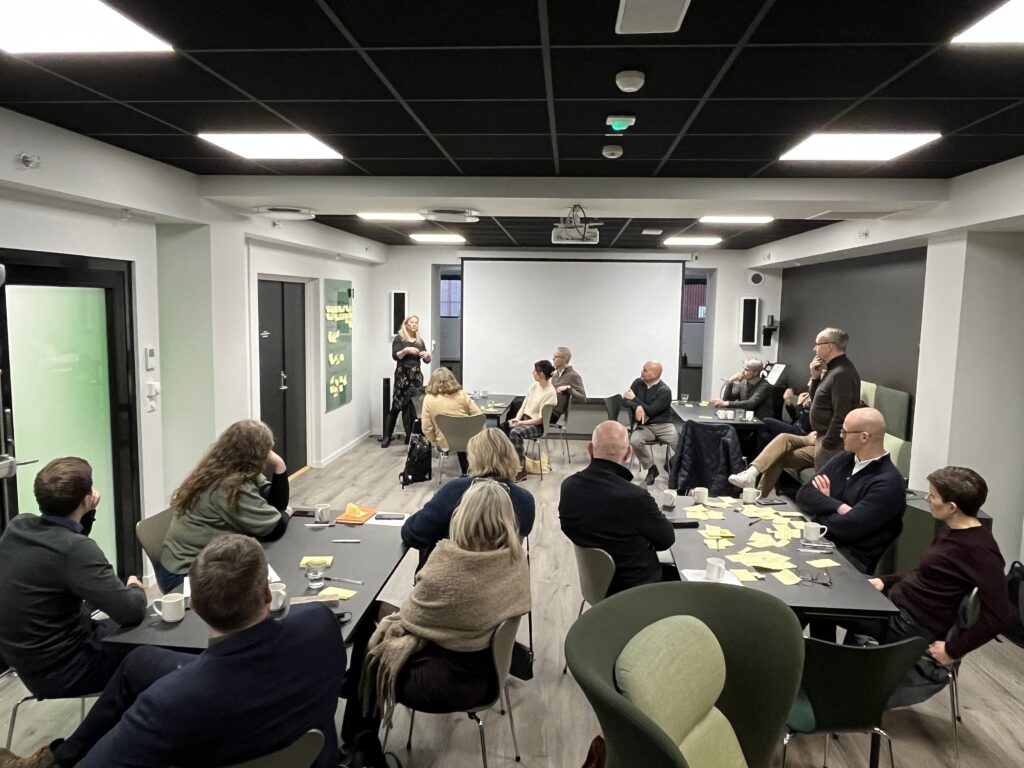
To succeed in this work, it is also important to understand – and apply – technologies with broad and industry-independent applications. For example, NCE Seafood recently organized a workshop that looked at the possibilities of using Big Data technology to solve the sea lice problem in the aquaculture industry. The focus was on the reliance on sharing information and data to solve the challenges facing the industry.
In our research, we refer to innovations that combine knowledge from different industries as 'cross-industry innovation'. Western Norway is particularly hard hit by the low oil price, but at the same time this region is also in a unique position through knowledge and expertise from several world-leading resource-based industries.
That companies in Western Norway are well on their way to restructuring is also evident from SR-Bank's latest economic survey. The report shows that a number of oil-dependent companies in Western Norway have moved into new related markets.
Not entirely new industries
Entrepreneurship and the establishment of new businesses are also important for the transition, but our research shows that new businesses are most successful when they are located within the existing regional industrial structure. Norway has many small companies. Scaling up this segment, where there is a lot of well-functioning structural capital, is a neglected area for increased value creation and more jobs.
But it is difficult to create completely new industries.
The exception is often research-driven investments in new technology, which can create fertile ground for new industries and a large number of jobs. However, the road to that is long and risky, and completely new industries will largely only be a supplement to the restructuring of existing industries.
"Transformation requires innovation and new creation"
Much of what we live by today, we will also live by in the future. And much of what we are adapting from, we will also bring to what we are adapting to. Globally, we see a number of trends and innovations that will seriously change society and business, but that does not mean that we must abandon knowledge, expertise and experience that have been accumulated and developed over centuries.
For the Norwegian economy, it is primarily about exploiting the opportunities that global trends provide to create a future-oriented and sustainable resource-based economy. Instead of discussing what we will live on "after oil", we should talk about how we can do what we already do in new and better ways.
Published on Sysla.no oil platform Illustration photo: Norwegian Shell