
The Norwegian Food Safety Authority will test more data-driven supervision
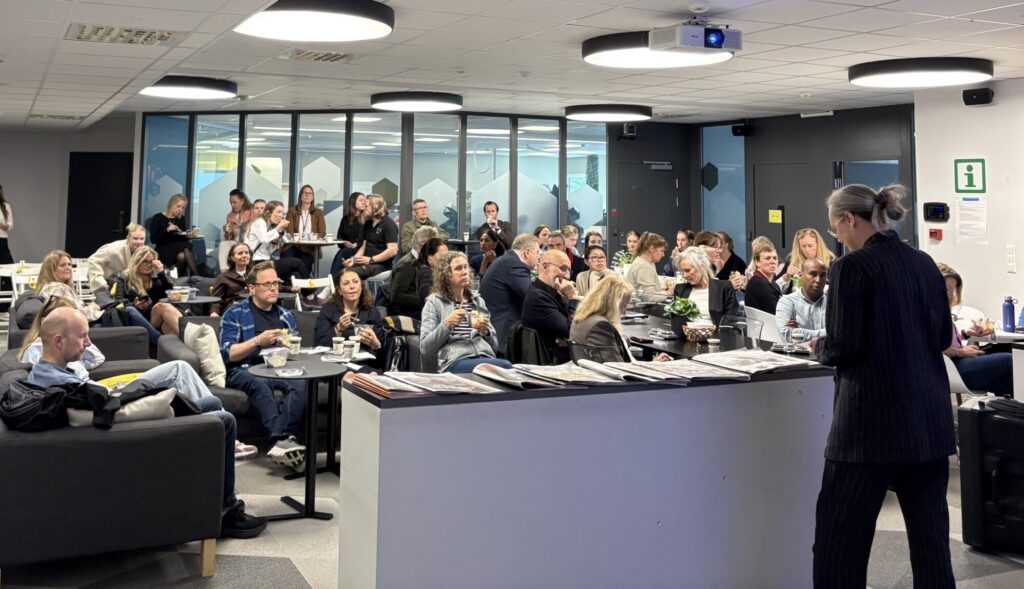
– A more data-driven supervision with a decentralized development will create benefits for both the industry and the Norwegian Food Safety Authority, says Ingunn Midttun Godal in her presentation.
A meeting between key stakeholders
How can we create value together with sharing data? asks Midttun Godal in his presentation when representatives from the seafood industry, academia and administrative institutions gathered on Thursday, September 1. The amount of data is growing exponentially, and it offers new opportunities and challenges for both industry and administration.
– Sharing data can make it easier for businesses to get what they need from us as a public enterprise, says Midttun Godal.
Better data also provides greater opportunities for data-driven decisions.
Wants more data-driven supervision
In his post, Midttun Godal explains that the Norwegian Food Safety Authority is working with two approaches towards the aquaculture industry. This means that they must both ensure that ongoing control is as automatic as possible based on data, while also carrying out comprehensive audits at the group level.
She says that increased data sharing can, among other things, make things easier for the industry by providing faster and simplified application processes, reducing the time spent on reporting, and it can provide greater transparency in how the Norwegian Food Safety Authority assesses locations, groups, and the industry as a whole.
– We are very concerned that there are some gains for us, but we believe that the gains here are greatest for the industry itself, says Midttun Godal.
Will conduct pilots
She further says that the Norwegian Food Safety Authority wants to start pilots where they can test data-driven supervision in the industry. Data from the industry can be used to automatically assess whether there is a need for further follow-up or not, so that means that those who are willing to share data that can be used to assess status will receive feedback based on that.
This means that the Norwegian Food Safety Authority can assess the need for inspections based on the data they receive. In addition, Midttun Godal says that the administration is concerned with making the groups more accountable instead of visiting each individual location.
– I think it's stupid to stand on the edge of the cage if you have a control room with sensors where you actually have a much better overview of the cage, in addition to the HSE challenges that come with it.
Based on trust
This does not mean that regulated data sharing is the solution, according to the Norwegian Food Safety Authority. Midttun Godal emphasizes a desire to achieve cooperation based on trust and a common understanding of achieving a sustainable industry with great growth potential.
– Regulations should be a last resort, because there is a form of coercion in regulating that data must be shared.
According to her, collaboration with the industry is key.
– We believe that both the regulations and public control will improve if we manage to cooperate well with the industries. Digitalization of the aquaculture industry is happening at a high pace and public control should be directed to a greater extent towards corporate management, and at the control panels in the fish farms.
Watch the full webinar here .