My ambition for the industry: Increased growth and economic returns with a focus on sustainability and fish welfare
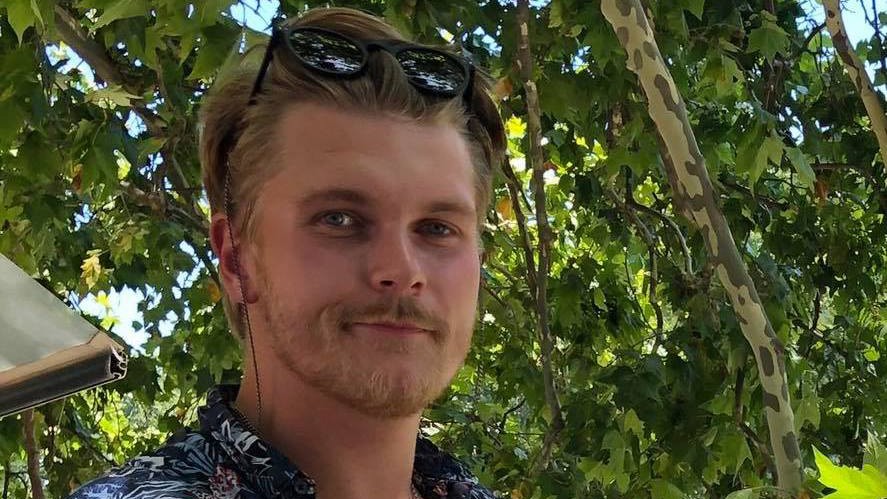
When Markus F. Braanaas began his studies, he had no doubt that a master's degree in aquaculture was the right path for him. In high school, he didn't take any science subjects – neither biology, mathematics, chemistry or physics. But an interest in the aquaculture industry – and a desire to work with technology, strategy, challenges and continuous change – led Markus to start a bachelor's degree in sustainable aquaculture. He believes that continuing with a master's degree in aquaculture biology was the next natural step, and believes that it is a good choice for anyone who enjoys challenges and has an interest in the industry.
– […] that I took a bachelor's degree in sustainable aquaculture only increased my interest in such a way that I gained theoretical knowledge and practical knowledge. In addition, I gained greater insight into potential challenges within the industry. Then it was a natural choice to continue at master's level in aquaculture. During the bachelor's degree, I was introduced to RAS systems and newer technology – which were then and still are of interest.
For his master's degree, he wanted to write his thesis on something that was technologically applied. Originally, he thought about RAS (Recirculating Aquaculture Systems), but chose to write about general intensive production implemented to increase growth and reduce production time, which applies to regular flow-through systems and RAS systems. The figure below illustrates the challenges of early sexual maturation in production (see the bottom of the article for a more detailed description and link to the completed thesis ).

He believes that the master's degree program itself was characterized by high quality and a good student environment.

–It is a good study environment. Within aquaculture-related studies, all students knew each other through having taken joint courses. This opened up for good subject-relevant conversations and discussions between us during the day, and social gatherings in the evening, which increased the well-being during the study period. The second is that the quality of the teaching – the competence – was high. You can tell that the lecturers knew the material, in addition to being very committed and good at learning. So if you are interested in learning about, for example, the biology of salmon or trout, or more within technology – then it is perfect. Then you get professors who are motivated and very competent to do this. In addition, they were very good at bringing in guest lecturers from the industry itself and, for example, from the Institute of Marine Research. And various organizations related to the industry.
He believes that the use of guest lecturers contributed to the teaching becoming closer to how things are done "in real life", and that they thus gained a clearer connection between biological theory and how production is carried out in practice.
When Markus is encouraged to suggest how such a master could be made even better, he has to take a break to think.
– […] as we mentioned earlier, it is an industry in constant motion, it must always adapt to new regulations and it must continue to become more sustainable. Then you will get changes. If you do not keep up with the changes made here, the knowledge you acquired 5 years ago will quickly become outdated. New developments in technology and strategy also tend to make production more complex than it has previously been. We see this, for example, in RAS plants. The use of biofilters is relatively new in Norway, and introduces bacteria as an important part of the system. It is therefore important to increase competence here. In the study ( Master in Aquaculture Biology, editor's note ), there were no mandatory courses that covered technology and strategies, which is relevant if you are going to enter the aquaculture industry itself. So I think that having mandatory courses on new technologies and strategies could have been interesting and necessary. It should be mentioned that voluntary courses include parts of this.
He points out that there is a big contrast between how it is now and how it was when salmon farming first started in Norway. Back then, production was relatively simple. He highlights today's production as both more complex and intensive, and reminds us that higher competence is needed in different fields. In order to keep up, it is therefore important to stay up to date with changes.
– Given that RAS is becoming increasingly popular to establish in Norway – and abroad – I find it exciting to be able to close the knowledge gaps I have, in addition to helping to develop it further and improve it .
We ask Markus what ambitions and wishes he has for the fish farming industry. Here is the clear answer:
– My ambition for the industry is mainly about two things: sustainability and fish welfare. In relation to sustainability, a lot is happening, both in terms of technological and production changes. There is still some way to go, but we are on the right track, things take time. In parallel, the trend in today's production is intensification and efficiency, this in order to increase growth (through increased management of the fish's biology) and economic yield (for example, by using land-based post-smolt production that reduces the seawater phase - reducing exposure time in the sea and associated fees and problems). This intensification, however, takes fish welfare into account to a lesser extent. We are pushing the biological nature of the fish to the limit, which has its consequences. When you work with and have responsibility for live animals, it is important to prioritize the animal's welfare. In short, further development must continue to focus on sustainability, while at the same time we must increasingly see the intensification of production in line with fish welfare.
Finally, we ask if he has any tips for those considering a career in the seafood industry.
– […] if you are interested in it and like challenges, then just go for it. That is my best tip. I went from a social science major in high school to a science major focused on what I wanted – which was biology and specifically within aquaculture. This argues that if you are interested in something, then just go for it. There are many exciting tasks and there will always be challenges to be solved.
Investigated intensive production in the master's thesis
Markus investigated whether intensive production (for increased growth and reduced production time) affected early sexual maturation of male salmon with a main focus on temperature and feeding. Access Markus' master's thesis here .
Read more about the master's program in Aquaculture Biology at the University of Bergen here and the collaborative project KABIS here .
Interview by Therese Skarlo and Marit Eggen at the University College of Western Norway.