Photo:NCE Heidner Biocluster
Blue and green collaboration
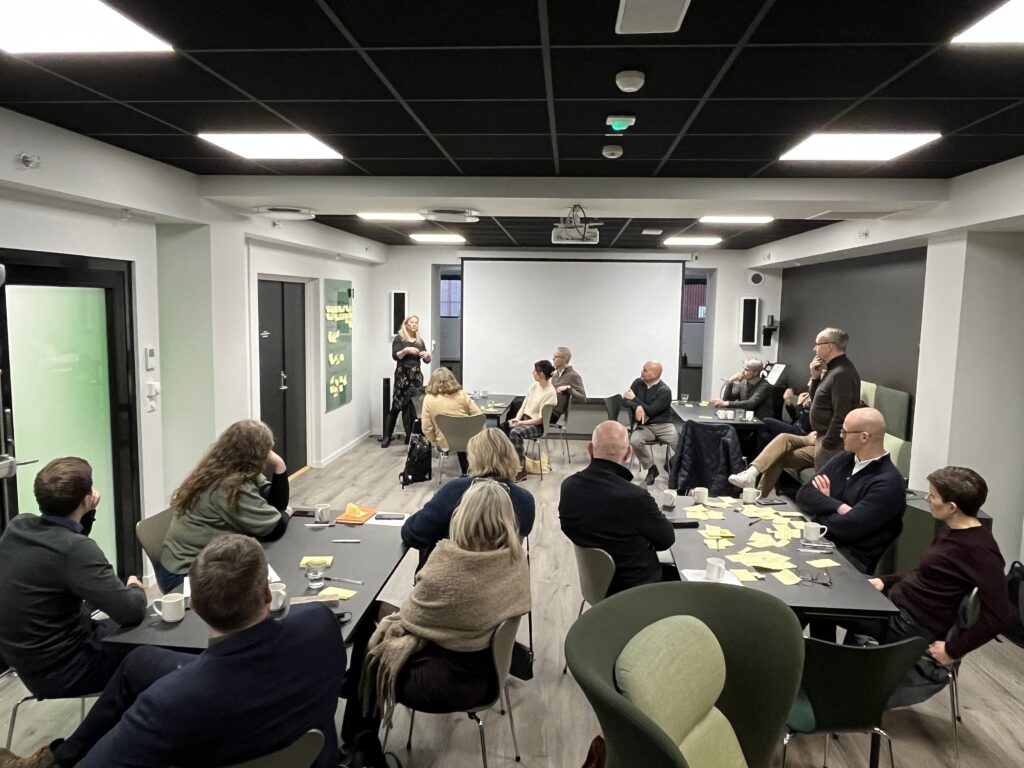
Norway has great advantages, in both seas, fjords, forests and soil. The advantages must be used wisely. Leaders from the green and blue sectors gathered to share knowledge and identify areas for increased collaboration in order to unleash the potential for sustainable value creation that lies in the Norwegian bioeconomy.
Creating new opportunities
Einar Wathne, chairman of the cluster and head of the Seafood Initiative at Cargill, pointed out that Norway has high expertise in many areas that are central to the bioeconomy, including strong research environments within basic life sciences, technology and industrial processes, agricultural and forestry research, the marine sector and environmental impacts. Wathne pointed out that it was particularly important to achieve better interaction between these areas of expertise. In a more circular economy, the development of new cross-sectoral value chains and expertise-intensive products may require increased collaboration across disciplines and sectors. The opportunities for increased innovation that cut across the generic technology areas of biotechnology, digitalization and nanotechnology.
The Government's Bioeconomy Strategy assesses the value creation potential associated with the bioeconomy as large. Increased and more efficient use of renewable biological resources is central to the transition towards a low-emission economy. We need strong cooperation between green and blue industries in Norway.
Here, the Clusters can help accelerate development within the bioeconomy.
Land meets sea, initiated by the clusters Heidner, Biotech North, BlueLegasea and NCE Seafood, is an example of enhanced collaboration across sectors and geographies, creating a foundation for new business activities and knowledge-based jobs throughout the country.
Link to event