
Sludge driving the development of industrial symbiosis on Samnøy!
Background to the project
With the aquaculture industry being one of Norway's most important export industries, it is important to develop more sustainable production models. Today, sludge from land-based fish farms represents an untapped resource, and important nutrients are wasted. This project assesses how biomass from aquaculture, such as sludge and dead fish, can be converted into biochar and heat, and used across multiple sectors in the region.
A collaboration across sectors
The project is carried out in collaboration between NCE Seafood, NCE Heidner Biocluster, NCE Blue Legasea and Biotech North, Land meets Sea, with funding from Vestland County Council. Actors such as Bolaks Group AS, Blue Ocean Technology, Bjørnafjorden Utvikling and GreenHouse have participated and contributed their industry experience.

The project has looked at the practical feasibility of future industrial symbioses on Samnøy or other land-based post-smolt facilities.
The low-emission society requires new models
The transition to circular value chains requires collaboration across sectors. Industrial symbioses have been identified as possible solutions to both make better use of our resources, reduce waste, and simultaneously reduce CO2 emissions, energy consumption, and negative impacts on nature.

This project focuses on how sludge management from a land-based post-smolt facility can lay the foundation for a local circular value chain.
A concrete opportunity for circular value chains
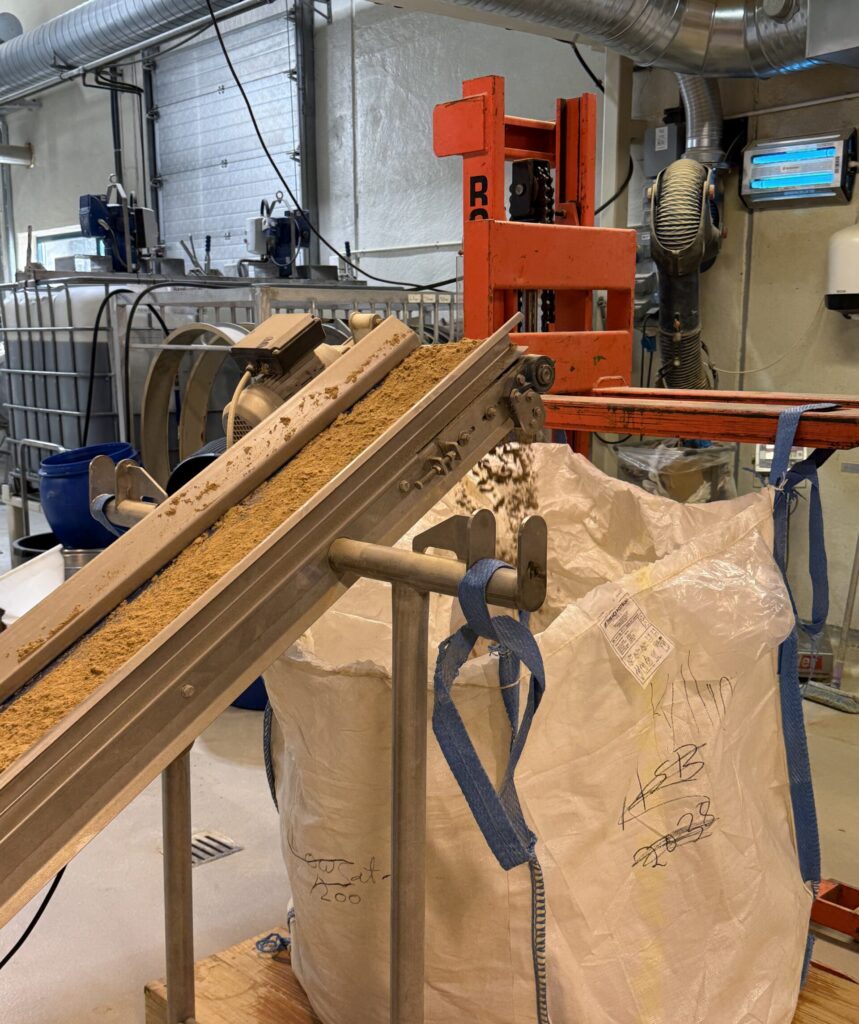
The project has investigated whether Bolak's planned land-based facility can be the basis for a local industrial symbiosis. The idea is to use pyrolysis to convert fish sludge into energy and biochar. In addition, Bolak has other land-based and sea-based facilities nearby, so that side streams such as dead fish and sludge are available and can be included in the biochar production. This can be done by utilizing the sludge into biochar and energy through pyrolysis.

Pyrolysis of sludge is primarily used for waste management, but few players in Norway have started to use it commercially. Pyrolysis of sludge can reduce the volume and thus lower the costs of handling and disposal, especially if the sludge contains undesirable substances .
Slam has great potential!
Sludge from aquaculture is a large, but currently underutilized resource. Estimates from 2022 show that the aquaculture industry produced around 334,000 tons of harvestable sludge, but without collection technology, much of this goes to waste. Current solutions for sludge management include dewatering, drying, biogas production, and in the future we may see methods such as pyrolysis to biochar and the use of sludge as fertilizer or protein through biological processes.

Figure 3: illustration from report
The way forward
Bolaks' land-based facility on Samnøy has the potential for an industrial symbiosis by utilizing the sludge for biochar and energy. Bolaks has a nearby timber quay on Samnøy as a source of side streams such as wood chips and branches, there are opportunities to create a local, circular value chain based on resources from both aquaculture and forestry. The project on Samnøy represents an important step towards realizing circular value chains within the aquaculture industry. With Bolaks as a key player, we hope that this initiative can inspire others in the industry to explore similar opportunities.

Figure 4: Illustration by Elise Sæle Dahle taken from report
Future opportunities
By utilizing sludge and other side streams from aquaculture and forestry, Samnøy can become a model for industrial symbiosis in Norway. This project shows how collaboration between different sectors can create innovative solutions that benefit both the environment and the economy.