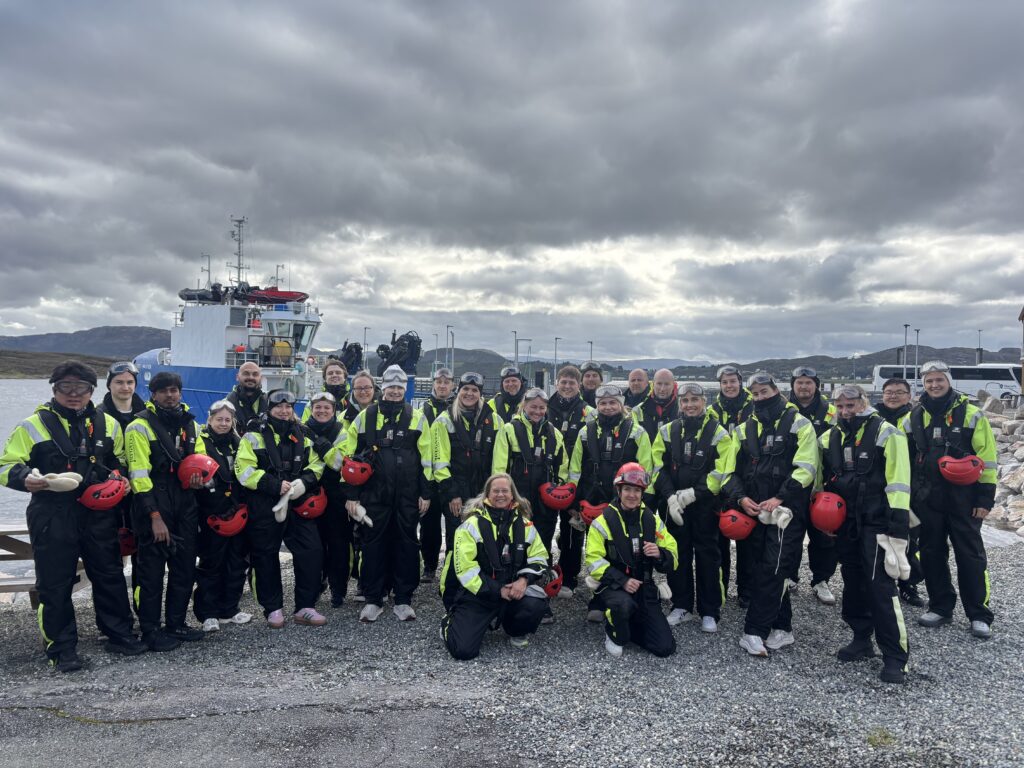

3 tips for those of you who have recruitment problems
This is a comment by Lena Bekken, program manager for Seafood Trainee. It was first published in Intrafish .
The Norwegian seafood industry is one of the pillars of our economy and the lifeblood of our coast. To maintain this positive development, we need more talent in the industry. Unfortunately, it has become increasingly clear that companies in Norway face a number of challenges in recruiting young talent.
The report referred to above was conducted by Randstad for the Norwegian labor market. It also highlights the issues employers most often face, especially in recruiting young talent. These three areas stand out:
- 60% report that young people in particular have unrealistic salary expectations
- 24% report that candidates lack work experience
- 37% report that candidates lack industry knowledge
Although these are challenges that many companies face, it doesn't mean they can't be solved. With a little strategic planning and collaboration, there is plenty of room for maneuver. It doesn't have to be difficult to get hold of young talent.
Here are some tips on how to successfully overcome the challenges in recruitment – especially aimed at recruiting young talent.
1. Make the offer attractive by offering more than just a higher salary
Many candidates place a lot of importance on salary when considering a job. In fact, as many as 28% choose to leave their job because their salary is too low compared to the general salary trend.
Let's take a closer look at some of the most attractive candidates (according to Møreforsk 's mapping of future skills needs in the seafood industry): tech, IT, electrical, automation, and engineering. Here, salary is actually at the top of the priorities when choosing a job (Tekna, Labour Market Survey 2023).
It is irrational to think that the solution for everyone is to increase the salary level in companies. However, we also know that young talents, in addition to salary, are particularly concerned with opportunities, both for learning, development, and career building. Development opportunities and exciting work tasks come in 2nd and 3rd place in Tekna's survey.
This means that you as an employer can still offer attractive jobs. Examples include through competency programs, career prospects, and work that is both meaningful and challenging for the individual. Also highlight what you can offer in terms of good insurance, welfare offers, a pension scheme, and other employee benefits. After all, it is the total package that the candidate will ultimately decide on.
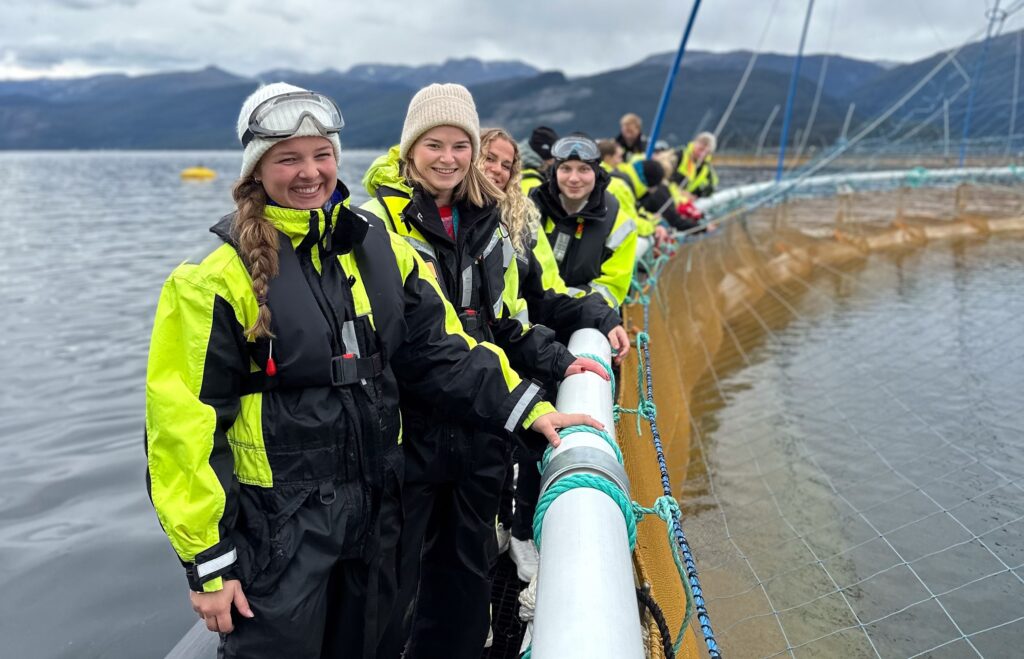
2. You can't conjure up experience – but you can choose to invest in young people and build them up
It is a shared responsibility to ensure that our industry has good expertise, and thus a development that creates growth. In a larger perspective, it is not so dangerous to lose talent to neighbors in the industry. One could even say that it is healthy that colleagues in the seafood industry have gained experience from several companies and learned to know different perspectives. What is at risk is if we as an industry appear unattractive overall. Then it will not matter much if a single company stands out.
What the realities are within the industry are of little importance if we are unable to show it to the outside world: that we are a rapidly growing industry with unique career opportunities – which also meet many of the expectations and desires of talents in choosing a job. In addition, the seafood industry has undergone enormous development and is far ahead in adopting and developing technology.
Here, other industries have achieved something we should learn from. The oil and gas industry in particular has managed to establish itself as popular among students (and perhaps especially with the most attractive students within tech, IT, electrical, automation, and engineering). The work has yielded results, and among Norway's ten most attractive employers, five of them are from the oil and gas industry (Randstad). We should learn from this.
Some of the things I have observed them doing are:
- They are early in the recruitment process, which allows them to choose from the best candidates.
- They manage to showcase the attractiveness of the industry, and are present where students seek information.
- They actively use trainee and graduate programs for new graduates to attract talent
- They appear to be an industry with many attractive employers, and candidates know they can get a job in the same industry if they wish to change employers.
At the same time, it is understandable that hiring new graduates without relevant experience can be a barrier, which means that one does not invest in activities that can distinguish the seafood industry from the crowd. Unfortunately, we cannot conjure up the ideal of being 25 years old, highly educated, with experience from the cage edge/fishing boat, and at least 10 years from other demanding positions in the seafood industry. What we can do, however, is reduce the risk by investing in young people.
In the Seafood Trainee trainee program, one of the premises is that candidates are hired for a year. This gives the company a unique opportunity to check the relationship and shape the talent to their specific needs. At the same time, the company benefits from a risk-reducing factor. The vast majority of candidates (just under 90%) end up in a permanent position immediately after the trainee year. The risk may therefore not be so great in the first place, but the threshold has been lowered.
3. Put young people on an express course for industry knowledge
One place where we can work a little magic is in shaping industry knowledge. The Seafood Trainee program is designed to give candidates a holistic experience and a kick-start in their seafood career. Over the course of the year, they gain insight into the seafood value chains, regulatory bodies, research and development, new products, and marketing/sales.
This includes four professional modules that last three days each in Norway and abroad with intensive learning. In addition, there is e-learning, a mentoring program, and access to a broad network within the seafood industry. The program gives candidates insight and expertise that would otherwise take several years to achieve. It also means that those who are Trainees have good conditions for development that makes them suitable for steep career paths.
Seafood Trainee is attractive among students, and every year 300–400 young talents apply to the program. They represent a wide range of professional backgrounds, and the common denominator is that they are motivated to start their careers in the seafood industry. The intake from companies is around 8%.
We want to open the doors further, and need a broad representation of companies to stand with us in fronting what is perhaps Norway's most exciting industry. Together we can strengthen the seafood industry and ensure a sustainable future.