Digitalization in the aquaculture industry, what next?
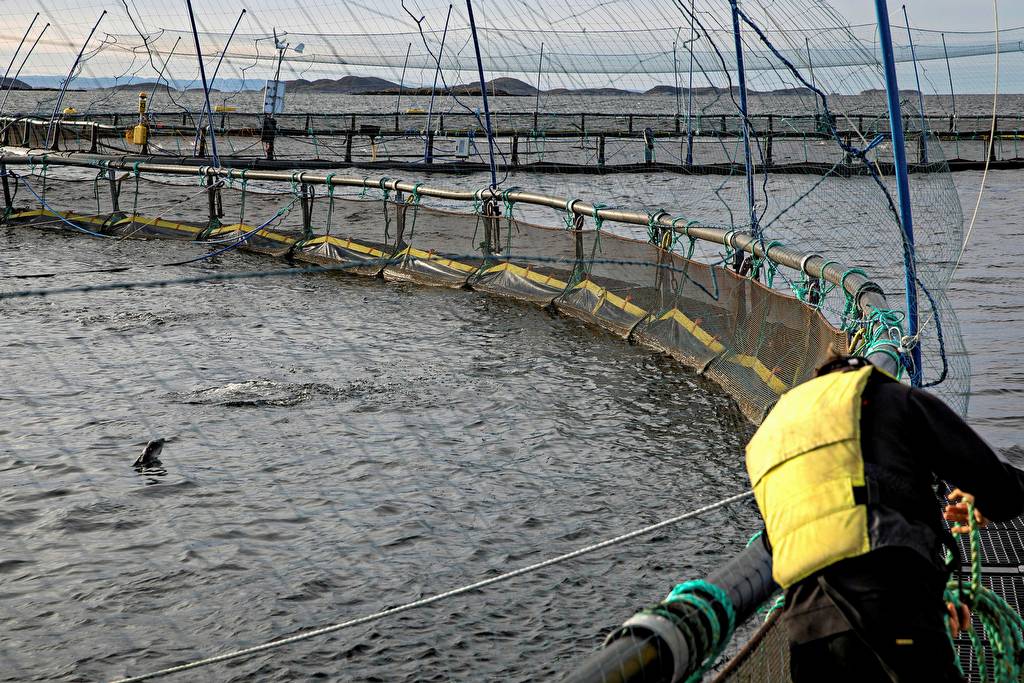
Illustration photo: Aleksander Nordahl
The article was first published in Fiskeribladet and was written by Dr. Einar Wathne, chairman of NCE Seafood and Jørn Torsvik, project manager for AquaCloud.
Sensors are being developed, we are analyzing images, we are sending data to the cloud and we are tracking the fish back to the kitchen. With the help of digitalization, we will crack down on lice, improve welfare and feed more efficiently.
Collects huge amounts of data
Is it more machine power, large data stores and artificial intelligence that will provide answers to the questions we want to solve? At least that is what it may look like with all the different digital initiatives from new start-ups, the established supplier industry, the digital giants, the aquaculture companies themselves, industry organizations and authorities.
We do not disagree that through data we can bring forth more knowledge, communicate better with the market, simplify everyday life and make better decisions. At the same time, we are acutely aware that many of the digital issues we struggle with in our daily lives are so basic that we hardly want to talk about them out loud.
We punch manual registrations, we report the same numbers in many formats and channels, and we collect enormous amounts of sensor data that we don't quite know how to use.


Joint organizations
Some industries have been ahead of the curve and shown the way when it comes to digitalization. We have a banking industry that is at the top of the world with simple, secure and efficient payment services. Have they had access to unique technology, or is the answer perhaps found on a completely different plane?
We believe that behind the success are wise bank managers who have understood that it is fundamental to first define what you want to get out of the technology and in what order. The banks have shown this with a focus on efficient money transactions across different banks and data centers, and more recently, targeted work to improve the user experience, as we see in Vipps.
But that's not all, the second criterion for success is how they have organized digitalization in the industry. Based on the realization that each bank would benefit from a common infrastructure, especially in competition with the then Postgiro, joint organizations were established to manage the development.
Common standards
The central body was the Banks' Standardization Office (BSK), which manages Norwegian banking standards and operates the banks' common settlement system. In 2016, BSK was separated from Finans Norge into the company BITS AS, which is directly controlled by the banks.
This was done to ensure continued agility in an increasingly rapid pace of digitalization. The direct involvement of the banks also helps ensure that the companies' interests provide clear priorities in joint projects with the public sector.
Our lesson should be that we prioritize the areas we want to digitize first, and then look at what is best solved within our own company, and where a larger community is needed, within the framework of competition law.
We believe that a digital strategy for the industry should be about ensuring common standards for defining, measuring and exchanging data. Furthermore, a secure, common infrastructure should be built that makes it easy to exchange information and make data available for reporting, research and the development of new innovative services.
Salmon population register
Once you agree on what, you should look at how. The banks placed important digitalization initiatives in jointly owned companies such as BITS, BankAxept and Vipps. Perhaps this is a model that can also work in the aquaculture industry.
A flagship project, and a possible start for the aquaculture industry's digital infrastructure company, could be to develop the industry's ID system for full chain tracking, a salmon population register, so that both consumers and researchers can trace the individual all the way back to its beginnings and ancestors, which is not possible today.
Establishing such a company will give companies ownership of what they solve together, and we will not be forced to accept solutions created by bureaucrats or "know-it-alls". We will mobilize and engage business leaders, and the company will be able to become an engine for strengthening the application of new digital technology for increased value creation in the industry.