ISO standards for circular economy
Why circular economy is important
Today, the global economy is largely linear, meaning that resources are extracted, used, and then disposed of as waste. This leads to resource scarcity, biodiversity loss, and pollution. A transition to a circular economy, where resources are kept in circulation for as long as possible, could be a key to meeting current and future sustainability needs.
Introduction to the ISO 59000 family
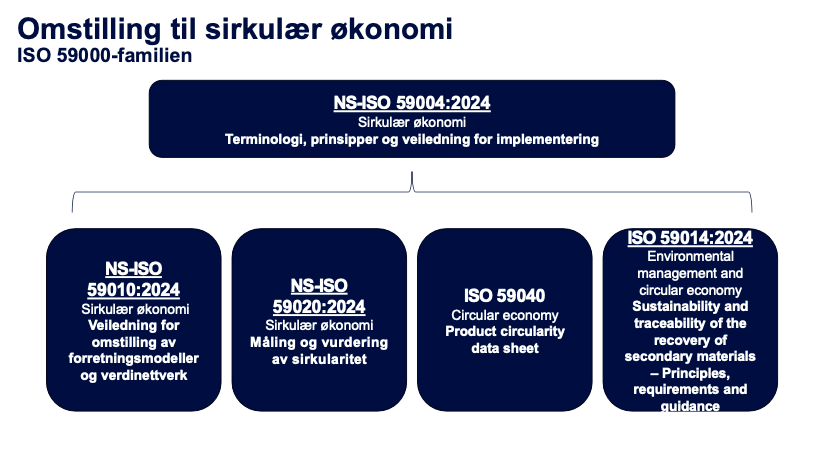
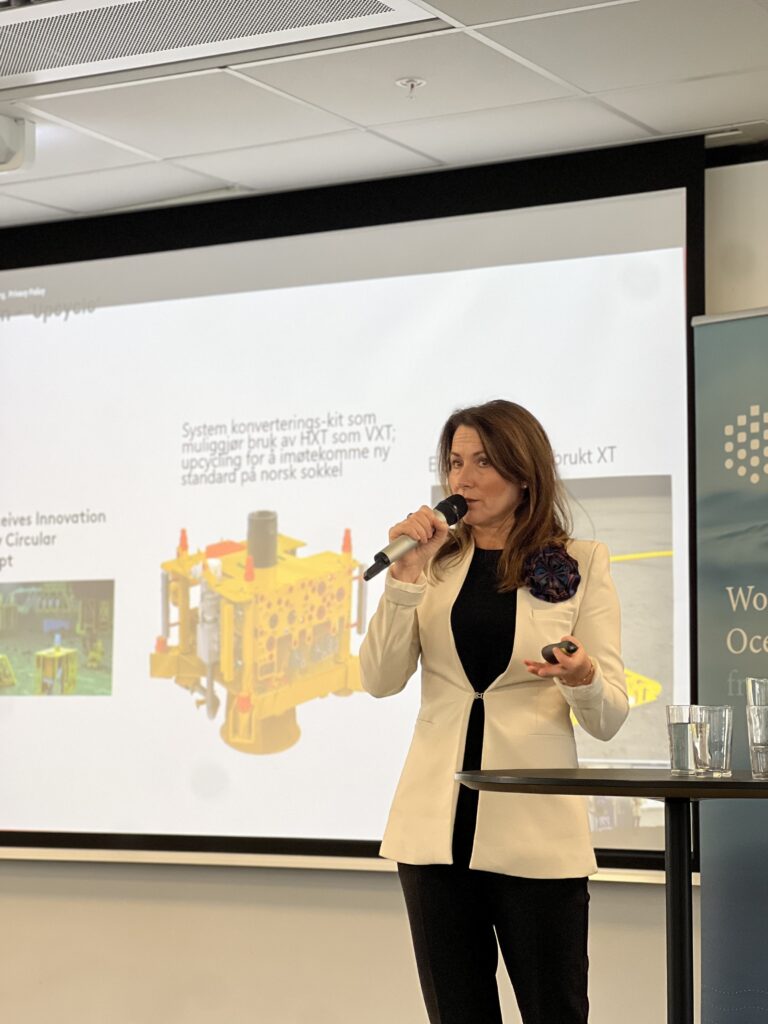
Marit Hauken from Standard Norway presented the ISO 59000 family of standards, which provide companies with guidance and tools to implement circular economy. The standards define important concepts, principles and measurement methods, and have been developed by experts from over 100 countries. NS-ISO 59004:2024, one of the central standards, focuses on terminology and principles for implementing circular economy, while NS-ISO 59020:2024 offers methods for measuring and assessing circularity in value chains.
Barriers to restructuring
One of the topics at the seminar was the challenges of transitioning to a circular economy. Several factors are currently slowing progress, including:
- Different definitions and quality requirements
- Little transparency across companies and sectors
- Regulatory restrictions
- Short-term strategy and business development
- Difficulties with measuring circularity
The NS-ISO 59000 standards can help companies overcome many of these obstacles by creating a common understanding and defining clear goals and actions for circular business models.
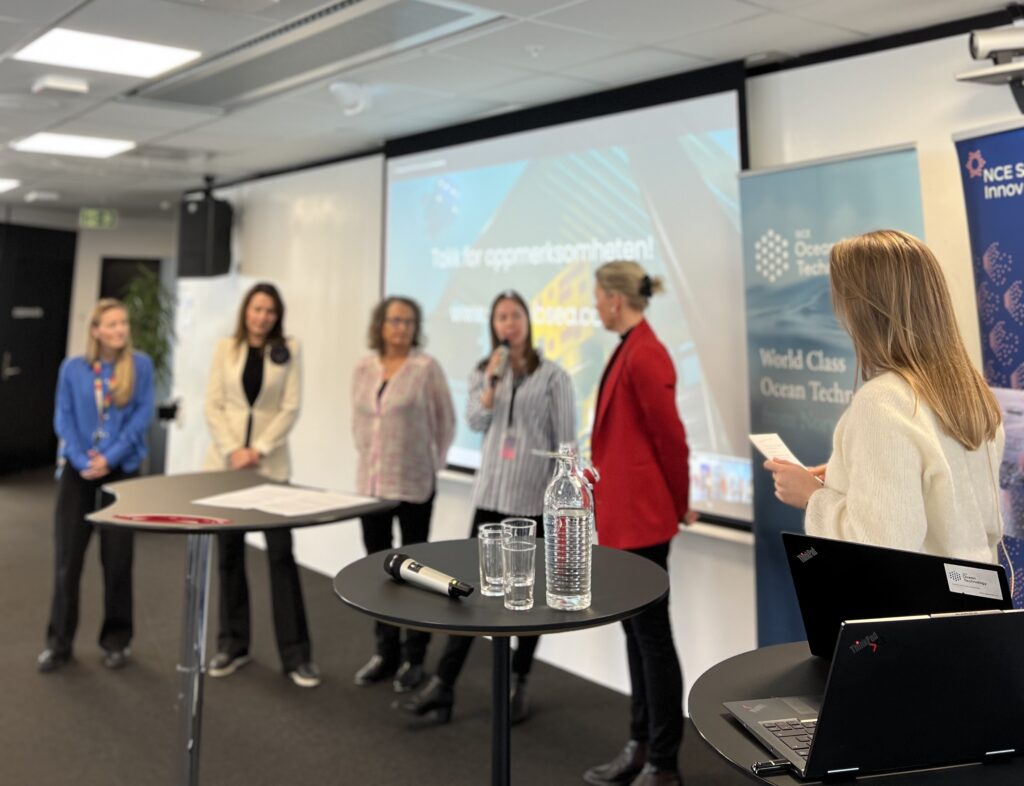
Panel discussion on circular solutions
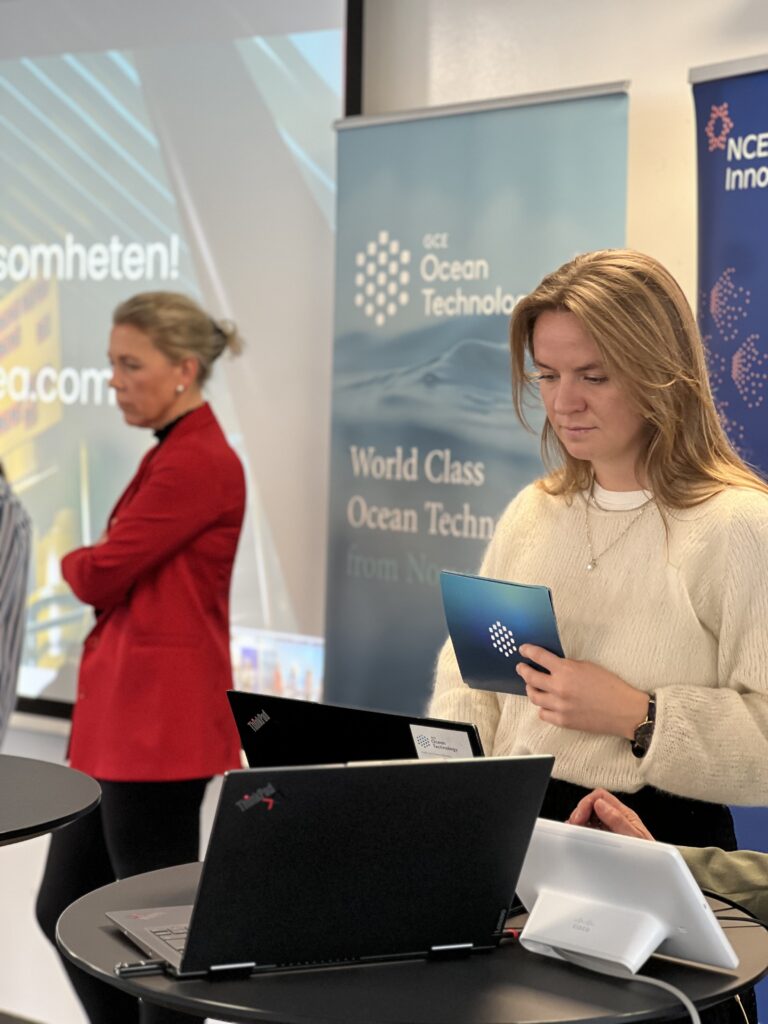
During the panel discussion, Thea Båtevik from GCE Ocean Technology asked the question: Now we have new standards for the circular economy. What else is needed for us to have more circular solutions and business models? The discussion revolved around the need for increased collaboration, digitalization, financing, innovation and competence development. The panelists pointed out that the standards can help define important concepts and describe overall principles for the circular economy.
What ISO 59004 can offer
ISO 59004 provides concrete measures that companies can implement to increase the degree of circularity. These include:
- Design for circularity
- Use of circular raw materials
- Circular procurement
- Process optimization and industrial symbioses
The way forward
The seminar gave participants a clear understanding of how circular economy can be integrated into business models and value networks, as well as what tools and standards can be used to measure progress.
For more information about ISO standards and how they can help your business, visit Standard Norway's website.