Teachers will now be trained in RAS technology
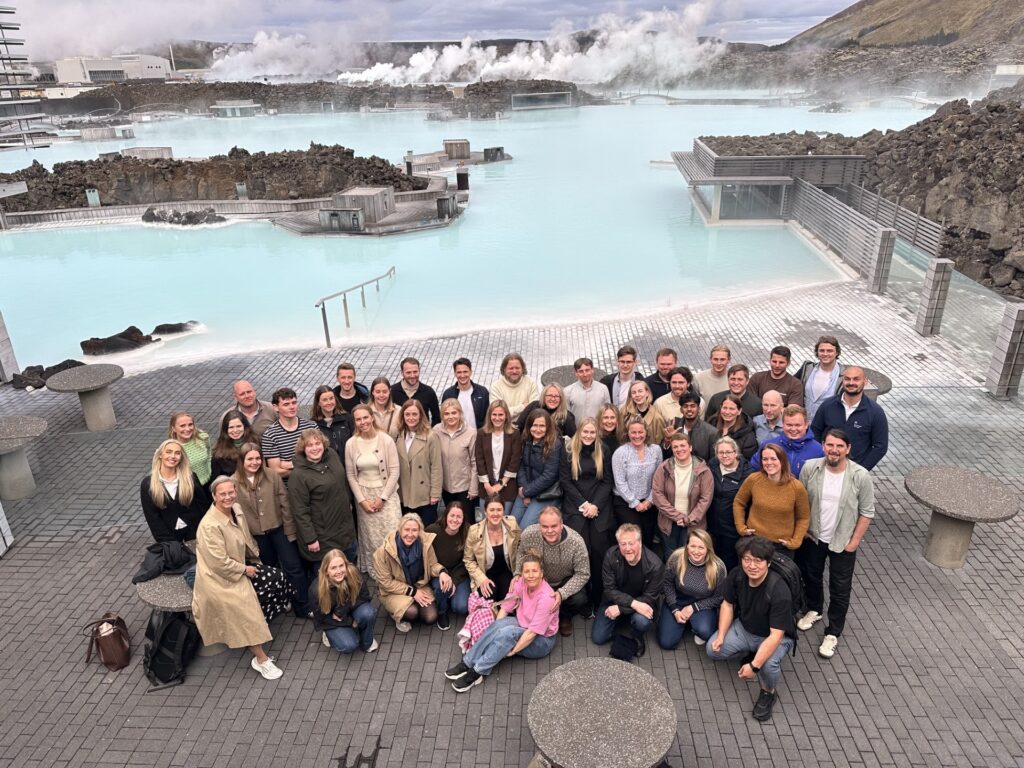
NIVA employees working in the industry Photo: NIVA
– New technology that is conquering the seafood industry means that we need competent teachers who know the new technology. We are very pleased to be able to realize such a course, and it shows that research, education and industry can collaborate to achieve something new. It is important to make teachers feel safe and give them insight into the technology while also facilitating their visits to facilities and meeting people in the industry with long experience and cutting-edge expertise, says Knut Olav Bjørnholm, department head at Måløy VGS, in a press release.
In-demand expertise among cluster members
The project Kompetanseløft upper secondary and vocational school in Western Norway in new and environmentally friendly technology, which is funded by Vestland County Council and Møre og Romsdal County Council, would like to invite you to a further education course for teachers in RAS (Recirculation in aquaculture systems) competence. The course has been developed by the Norwegian Institute for Water Research (NIVA), Måløy upper secondary school and Onshore Technologies (ONTEC). NCE Seafood is behind the initiative and Akvahub contributes with project management.
– It is the members and partners in the cluster who have requested increased expertise within the new and innovative technology, says Benedicte Skogen, who is responsible for the project at NCE Seafood.
– A survey showed that there was a need for education for teachers at both vocational and upper secondary schools, continuing education courses for employees in the industry within RAS, and a new vocational school offering, continues Skogen.
Collaboration between research, education and industry
The course is developed based on teachers' needs for further education, and is a collaboration between research, education and industry, and the program is a tailored training program for teachers.
– Training in RAS differs from traditional training in aquaculture in that it includes more of both biology, chemistry and technology. Providing students with training with a practical approach to how all of this works separately and together can be a bit of a challenge, especially when you have limited time. In developing the course, the school, business and research have worked closely together. This has been an exciting way of working, and we hope this contributes to producing a good course for teachers, and that they can benefit from this in their work with training students, says Mona Bakke Svarstad, project manager for Aquaculture Education at Måløy Upper Secondary School.
– The boundary between biology and mechanics, which is largely found in RAS, is a very exciting field of study. There is great complexity in a RAS facility, and an interdisciplinary approach and overview together with system understanding are crucial for success. We see that if everything is done correctly, the potential for value creation is great, says project manager Yngve Hjertenes, in ONTEC.

Yngve Hjertenes and Mona Bakke Svarstad. Photo: Måløy VGS.
Utility value
– We are pleased to be part of this initiative to further educate teachers about RAS technology. For a number of years, we have held courses at universities and in the industry. Farming in recirculating systems is complex, and we see great value in being part of this promise for teachers so that students will receive a professional foundation even before they enter the workforce, says Åse Åtland, Research Director at NIVA.
Upon completion of the course, teachers will have gained a basic theoretical and practical understanding of how a RAS system works, both technically and biologically. Participants in the course will also have access to a teaching plan that they can easily adapt and use in their student group.
– We need to upgrade our knowledge. There are no textbooks on this topic as of today, and what exists now is very superficial. We create our own material. We have to participate in this, says Christian Pedersen, teacher at Fusa VGS.
Registration for the course
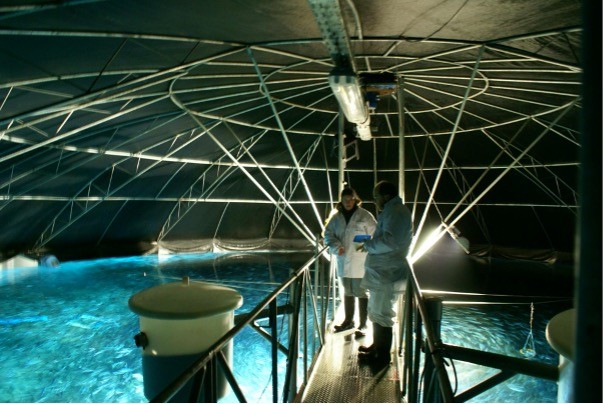
In the course, teachers will receive training in the biological needs of fish, technical components and function in recycling plants, water treatment in recycling plants, measurement methods and use of measuring equipment, as well as key principles for operating recycling plants.
The course will be conducted as a self-study course with two digital half-day sessions on March 17 and 24 and a three-day session at Måløy VGS on April 13 to 15. The course will also be open to others who wish to improve their skills within RAS.
For more information and registration, visit https://www.deltager.no/EVU_RAS_2021 or contact Åse Åtland at ase@niva.no .
About the parties:
NIVA is Norway's most important environmental research institute for water issues, and they work within a broad spectrum of environmental, climate and resource issues and have extensive experience with aquaculture and RAS. Their research expertise is characterized by solid academic breadth, and cutting-edge expertise within many important areas.
Måløy Upper Secondary School has county-wide courses in maritime and marine subjects in addition to YSK aquaculture (educational courses leading to vocational qualifications through a vocational certificate in addition to special university entrance qualifications). They are co-located with the Vocational School in Sogn og Fjordane, maritime department (Måløy), which offers nautical and ship technical officer education. The school also includes the Security Centre in Måløy, which has developed extensive course and assignment activities within the maritime sector.
Onshore Technologies is a pioneer in the industry, with unique technology that is modular, robust and cost-effective. It has been tested in pilot plants in Norway, Ireland and Scotland, and was the basis for OFS Måløy's permit to farm 15,000 tons of salmon. They are establishing an industry-leading customer and competence center in Måløy. The competence center ensures good access to relevant and high-level expertise.
NCE Seafood is the initiator and project owner. In the work for sustainable growth in the seafood industry, cluster members have expressed a need for a workforce with increased expertise in innovative RAS technology, which is the background for the competence project.